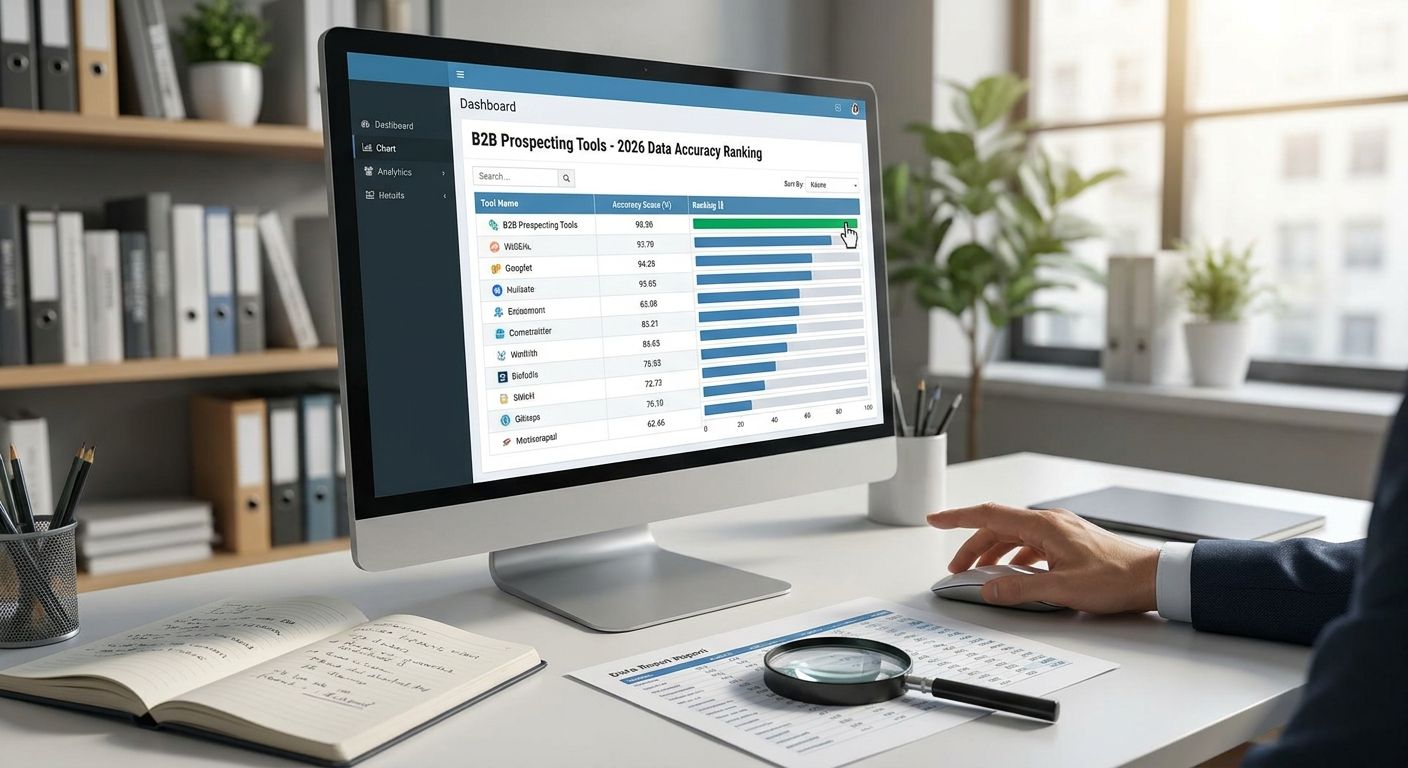

Seven B2B prospecting tools stand out for outbound sales teams in 2026, and the right pick depends on whether you need cross-platform contact discovery, enterprise firmographic depth, or native LinkedIn search — not a single winner-takes-all product.
- Lessie AI wins for cross-platform B2B lead discovery across LinkedIn, Twitter, GitHub and 100+ sources.
- ZoomInfo is the pick for enterprise-grade contact verification and org-chart depth.
- Apollo.io fits teams that want database search and email sequencing in one login.
- Cognism leads for GDPR-compliant prospecting into EU and UK accounts.
- No single one of these best b2b prospecting tools for outbound sales teams covers every use case — most teams pair two.
Why this matters
Outbound teams waste budget stacking tools that overlap 80% of the time. A search-first tool like Lessie AI covers discovery across 50M+ profiles and 100+ sources; a database-plus-sequencer like Apollo.io covers discovery and outreach in one seat. Picking the wrong shape means paying twice for the same job.
The list below ranks seven tools by the outbound use case they actually solve in 2026 — not by which one has the biggest logo wall. Every entry gets an honest pro-and-con breakdown, because a page that only praises a product doesn't tell you anything you can act on.
The verdict
Best overall for cross-platform lead discovery: Lessie AI. Best for enterprise contact verification: ZoomInfo. Best for native LinkedIn outbound: LinkedIn Sales Navigator. Best for chaining enrichment workflows: Clay. Best for quick browser-based lookups: Lusha. Best for GDPR-compliant EU prospecting: Cognism. Best for combined database-plus-sequencing: Apollo.io.
What makes the best B2B prospecting tool
- Data source breadth — does it pull from one network or many (LinkedIn, GitHub, Twitter, company sites)
- Contact verification — how the tool confirms an email or number is still live
- Enrichment and workflow support — can you chain search results into a sequencer or CRM
- CRM and outreach integration — native connectors versus manual export
- Compliance coverage — GDPR and CCPA handling for EU and California contacts
- Learning curve — how fast a rep gets from signup to a working list, tied to the AI people search engines for B2B leads comparison
At a glance
| Tool | Best for | Standout feature | Key limitation |
|---|---|---|---|
| Lessie AI | Cross-platform lead discovery | Searches 50M+ profiles across 100+ sources | No built-in email sequencing |
| Apollo.io | Combined database + sequencing | Search and outreach in one login | Data depth on smaller companies varies |
| ZoomInfo | Enterprise contact verification | Org-chart and firmographic depth | Requires an annual commitment for full access |
| LinkedIn Sales Navigator | Native LinkedIn outbound | InMail tied directly to LinkedIn network | Data limited to LinkedIn profiles only |
| Clay | Chaining enrichment workflows | Combines multiple data providers in one build | Setup takes technical comfort with workflows |
| Lusha | Quick browser-based lookups | Lightweight extension for on-page reveals | Shallower company-level data than ABM platforms |
| Cognism | GDPR-compliant EU prospecting | Verified mobile numbers for EU and UK contacts | Narrower North America coverage |
1. Lessie AI: best for cross-platform B2B lead discovery
Lessie AI is an AI-powered people search engine that searches 50M+ profiles across LinkedIn, Twitter, GitHub and 100+ other sources in one query. It's built for sales and recruiting professionals who need to find a specific person — a lead, an investor, a candidate, a speaker — rather than browse a static company database.
Lessie AI pros:
- Searches across 100+ sources instead of a single network, useful when a target isn't active on LinkedIn
- Surfaces contacts for varied use cases: leads, investors, talent, partners
- Cross-references profiles ranked in the people search engines ranked by data coverage comparison
Lessie AI cons:
- No native email sequencing or dialer — it's a discovery layer, not a full outbound suite
- Best paired with a CRM or sequencer for the send step
Best for: outbound teams that need to find people who aren't neatly listed in one database.
Verdict: Buy if discovery breadth is your bottleneck, not send volume.
Search 50M+ profiles for your next lead
Find verified contacts across LinkedIn, Twitter, GitHub and 100+ sources.
2. Apollo.io: best for combined database and sequencing
Apollo.io pairs a contact database with built-in email sequencing and a dialer, so reps can find and email a prospect without switching tools. It's a common default for smaller outbound teams that don't want to manage two subscriptions.
Apollo.io pros:
- Search and sequencing live in the same workspace
- Wide adoption means most reps already know the interface
- Chrome extension for on-page contact capture
Apollo.io cons:
- Contact accuracy on smaller or newer companies can lag behind enterprise-focused databases
- Sequencing features add complexity if you only need the database
Best for: teams that want discovery and outreach under one login.
Verdict: Buy if you'd otherwise pay for two separate tools anyway.
3. ZoomInfo: best for enterprise contact verification
ZoomInfo focuses on firmographic depth and org-chart mapping, which is why enterprise ABM teams lean on it for account-based outbound in 2026. It's built for volume and verification rather than speed of setup.
ZoomInfo pros:
- Deep org-chart and firmographic data for account mapping
- Intent-data add-ons for timing outbound to buying signals
ZoomInfo cons:
- Typically sold on annual contracts, which is a heavier commitment for a small team
- Steeper onboarding than lighter, self-serve tools
Best for: enterprise teams running structured account-based outbound.
Verdict: Buy for ABM at scale; Skip if you need a fast, low-commitment setup.
4. LinkedIn Sales Navigator: best for native LinkedIn outbound
LinkedIn Sales Navigator lives inside LinkedIn itself, giving reps advanced search filters and InMail access tied directly to the network where most B2B buyers already have a profile.
LinkedIn Sales Navigator pros:
- Filters run natively on LinkedIn's own graph — no data-matching gap
- InMail reaches prospects who don't publish an email anywhere
LinkedIn Sales Navigator cons:
- Data is limited to what's on LinkedIn; no cross-platform enrichment
- No sequencing beyond InMail cadences
Best for: reps whose entire target list is active on LinkedIn.
Verdict: Buy as a companion tool; Hold if it's meant to be your only source.
5. Clay: best for chaining enrichment workflows
Clay is a workflow builder that lets you stack multiple data providers and AI enrichment steps into one automated pipeline, rather than relying on a single vendor's database.
Clay pros:
- Combines several data sources into one enrichment run
- Flexible enough to build custom scoring and routing logic
Clay cons:
- Requires setup time and comfort building workflows, not a plug-and-play search box
- Not a data source on its own — it depends on the providers you connect
Best for: ops-heavy teams that want to automate enrichment across multiple vendors.
Verdict: Buy for teams with a revenue-ops function; Wait if no one owns workflow setup.
6. Lusha: best for quick browser-based lookups
Lusha is a lightweight browser extension that reveals contact details while a rep is already browsing a LinkedIn profile or company site, built for speed over depth.
Lusha pros:
- Fast setup and low friction for individual reps
- Works in the flow of browsing, no separate search step
Lusha cons:
- Company-level data is shallower than dedicated ABM platforms
- Less useful for building large, structured target lists
Best for: individual reps who need a quick contact reveal, not a list-building engine.
Verdict: Buy for solo prospecting; Skip for team-wide list building.
7. Cognism: best for GDPR-compliant EU prospecting
Cognism is built around verified mobile numbers and compliance handling for EU and UK outbound, which is why teams selling into Europe reach for it over US-first databases.
Cognism pros:
- Compliance handling built for GDPR and UK data rules
- Verified mobile numbers for markets where email-only outreach underperforms
Cognism cons:
- North America coverage is narrower than US-focused competitors
- Less useful if your entire pipeline is domestic
Best for: teams running outbound into EU or UK accounts.
Verdict: Buy for EU-heavy pipelines; Skip if your territory is US-only.
How we ranked
Each tool was scored against the six criteria above — source breadth, verification, enrichment support, integration, compliance and setup speed — and slotted into the use case where it's the clear fit, not forced onto a single leaderboard. The same lens sits behind the people search engines ranked by data coverage breakdown, if you want the coverage angle in more depth.
If a prospecting tool can't tell you where its contact data came from, don't trust the phone number it gives you.
Which B2B prospecting tool should you choose?
Start with the job, not the logo. If discovery is the gap — finding people who aren't sitting in a static database — Lessie AI covers the most ground across 100+ sources in 2026. If you need send volume in the same seat, Apollo.io closes that gap. Enterprise ABM teams still default to ZoomInfo for verified org-chart depth, and EU-heavy pipelines lean on Cognism.
Teams testing the waters before committing to a paid seat can start with the free people search engines comparison to see what's usable at no cost before scaling up.
FAQ
What's the best B2B prospecting tool for outbound sales teams in 2026?
Lessie AI is the strongest pick for cross-platform lead discovery, searching 50M+ profiles across LinkedIn, Twitter, GitHub and 100+ sources. Apollo.io fits better if you need sequencing in the same tool.
Is Lessie AI better than ZoomInfo for B2B leads?
They solve different problems: Lessie AI covers cross-platform discovery across 100+ sources, while ZoomInfo focuses on enterprise firmographic depth and org-chart mapping. Teams running structured ABM often want ZoomInfo; teams chasing people across multiple networks want Lessie AI.
How much do B2B prospecting tools cost?
Pricing varies by contact volume, seats and features, so check current plans directly on each vendor's site before comparing. Cost structures differ between per-seat, per-credit and annual-contract models.
What's the difference between a people search engine and a sales engagement platform?
A people search engine like Lessie AI finds and surfaces the right contact across multiple sources. A sales engagement platform handles the sequencing and sending once you already have that contact.
Can I use Apollo.io and Lessie AI together?
Yes — a common setup is discovery in Lessie AI followed by sequencing in a dedicated outreach tool, since Lessie AI doesn't include native email sequencing.
Is LinkedIn Sales Navigator enough for outbound prospecting on its own?
It works if your entire target list is active on LinkedIn, but it can't surface contacts who only show up on other networks or company sites. Teams needing broader coverage pair it with a cross-platform tool.
Do I need a GDPR-compliant prospecting tool for EU leads?
If you're prospecting into EU or UK accounts, compliance handling matters, and Cognism is built specifically around that requirement. US-only databases don't always carry the same compliance framework.
What data sources matter most for B2B prospecting accuracy?
Breadth matters as much as depth — a tool pulling from one network only surfaces contacts active there. Lessie AI's 100+ source coverage is built to close that gap.
One last thing
Most outbound teams don't need one all-in-one platform — they need one tool for discovery and one for the send. Paying for a bundled suite that covers both often means using a fraction of what you're billed for; pairing a search-first tool like Lessie AI with a lighter sequencer usually costs less friction than forcing every rep into one bloated stack in 2026.